Frankfurt/M.: Suhrkamp 1996
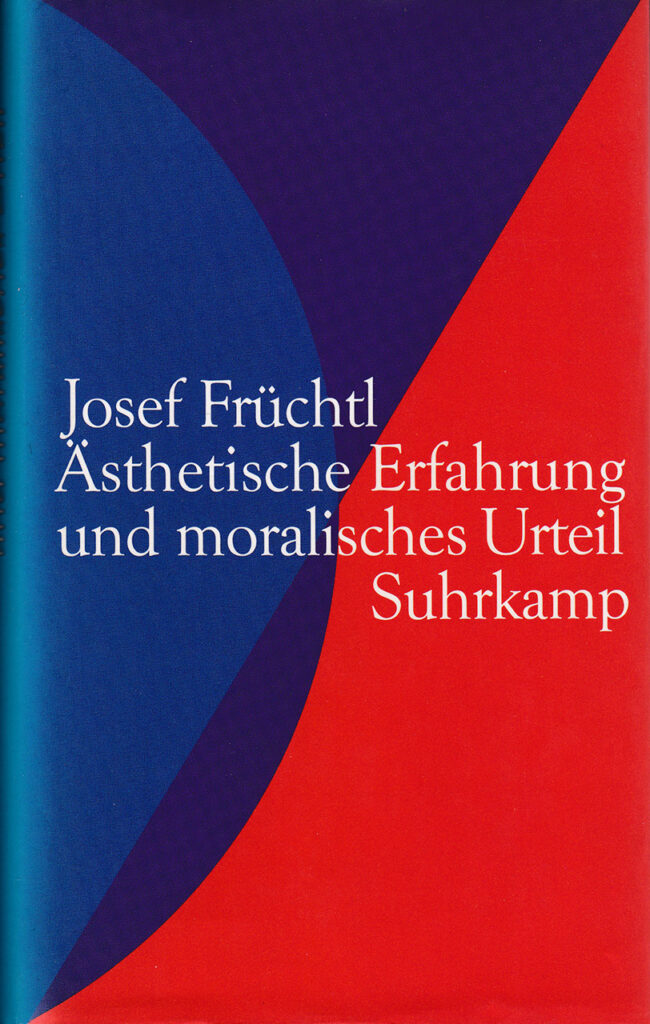
Die Habilitationsschrift schlägt eine Rehabilitierung der Ästhetik in ihrem Verhältnis zur Ethik vor und orientiert sich dabei an postmodernistischen (Foucault, Rorty), neoaristotelischen (Gadamer, Nussbaum) und ästhetisch-ökologischen (Böhme u.a.) Positionen. Das Verhältnis von Ästhetik und Ethik wird nicht nach dem geläufigen Dualismus von strikter Unterscheidung und diffuser Einheit dargestellt, sondern differenziert in eine fundamental-, marginal-, paritäts- und perfektionsästhetische Ethik, also in eine Ethik, die die Ästhetik als Fundament, als marginalen Bestandteil, als gleichgewichtigen Bestandteil oder als Vollendung der Ethik begreift. Letztere bietet auf der Folie einer integrativen Konzeption von ästhetischer Erfahrung den besten Rechtfertigungsansatz. Integrativ ist diese Konzeption, sofern sie mit Kant, Schiller und Dewey die nicht-ästhetischen Dimensionen der Vernunft spielerisch miteinbezieht.
The habilitation treatise proposes a rehabilitation of aesthetics in its relationship to ethics, and is oriented towards postmodernist (Foucault, Rorty), neo-Aristotelian (Gadamer, Nussbaum) and aesthetic-ecological (Böhme et al.) positions. The relationship between aesthetics and ethics is not presented according to the common dualism of strict distinction and diffuse unity, but differentiated into a fundamental-, marginal-, parity- and perfection-aesthetic ethics, i.e. into an ethics that understands aesthetics as a foundation, as a marginal component, as an equally important component or as the completion of ethics. The latter offers the best approach to justification on the basis of an integrative conception of aesthetic experience. This conception is integrative insofar as it playfully includes the non-aesthetic dimensions of reason with Kant, Schiller and Dewey.