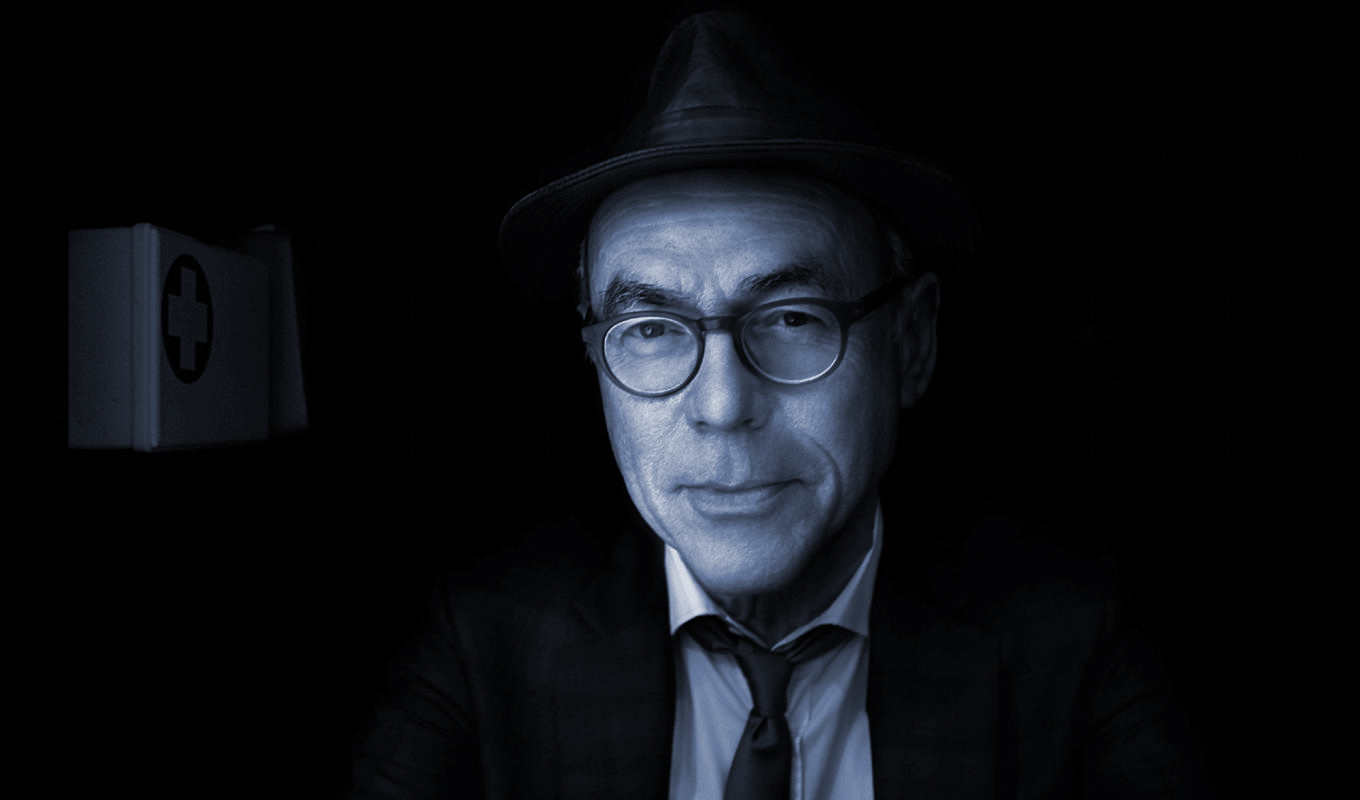
Vita
Frankfurt School boy, originally from Bavaria; professor of philosophical aesthetics and cultural theory in Münster, later in Amsterdam (UvA); meanwhile retired and a citizen of Berlin.
My intellectual biography as a short story
Born in 1954 („It’s a bad age for emotions“, says Maria Braun in a film by Fassbinder, the house of the ‚economic miracle‘ is exploding, the voice of the football reporter on the radio is cracking: „It’s over! It’s over! It’s over! Germany is champion of the world!“), I studied in Frankfurt/Main, starting in the mid-70s (when Willy Brandt had resigned, the terrorism of the RAF reached its highest point, the Ecological Movement began to develop and Critical Theory appeared in the gesture of Rumpelstiltskin: breaking the attractive power of the commodity-society in trying to call its name). Having completed my MA thesis, I went to Paris for a year (the „capital of the 19th century“, as Benjamin proclaimed, and now Foucault, Derrida, Deleuze and others were tempting, too, whereas in Germany Helmut Kohl had become Chancellor). A PhD in 1986 (the year of Chernobyl) with a work on Mimesis – Constellation of a Central Concept in Adorno. Afterwards I was given the chance to go to Italy for two years (Pisa, Rome, Naples) as a research scholarship holder of the Alexander von Humboldt-Foundation (so much art, so much natural, i.e. cultural beauty and so much sun). After my return (the Berlin wall was coming down) I became an assistant teacher in the Philosophical Department of the University of Frankfurt, getting to know a lot of young colleagues and famous professors of philosophy from the US (like Richard Rorty and Martha Nussbaum), being guests of Jürgen Habermas – an extraordinary and stimulating intellectual atmosphere, a liberal space for philosophical discussion and friendship (similar to what Plato’s Socrates must have had in mind). The postdoctorate procedure took place in 1994/95 after having presented my manuscript Aesthetic Experience and Moral Judgement. Shortly afterwards (and hard to believe), in Spring 1996 (Kohl still Chancellor in Germany), I was appointed Professor of Philosophy with a focus on aesthetics and theory of culture at the University of Münster. Münster is a small town with tens of thousands of students (and bicycles). In 1648 the end of the 30 Years War in Europe was proclaimed there. It is a nice town to stay in for a few days. So the time had come to write a book on modern heroism: The Impertinent Self. A Heroic History of Modernity. It was published in the Summer of 2004, when the Amsterdam project slowly became reality. (And in Germany the short age of Joschka Fischer and a Chancellor called Gerhard Schröder has faded away; in 2005 for the first time there is a female Chancellor. „For the times“ – Bob Dylan is on the road again – „they are a-changing“. Only Woody Allen seems to remain the same.) In September 2007 I became Head of the Department at my new university, and I had to fulfil this task for five (long) years. But in between I enjoyed the English publication of my book on Modernity, a short stay at Tsinghua University Bejing and a Research Fellowship at the IKKM in Weimar. (The crises of, first, “the financial markets” – the markets of the “bankster” – and, later, the Euro were spreading out since fall 2008 when the Investmentbank Lehman Brothers went bankrupt, and politicians were reacting with one huge official “rescue package” or “protective shield” after the other. The world is full of zero’s and dead losses. And in between for the first time the U.S. Americans have voted for an Afro-American president: “Yes We Can”). So the time had come to write a book on Trust in the World. A Philosophy of Film. It came out in 2013 when I came back from a Research Fellowship in Bad Homburg/ Frankfurt/M., a lecture tour in California and New York, and another one in Brazil (while Angela Merkel was reelected as German Chancellor for the third time, and we finally had to learn that the Secret Services throughout the world are treating each one of us as a potential enemy, thus that they don’t trust us). When the English version came out in December 2018, times in a certain way had changed again. For one year (2017–2018) I had to take over the task of the Head of the Department again, but this time happily under highly politicized conditions. For in 2015 – shortly before leaving for a Research Fellowship at the IFK in Vienna – the situation of permanent cuttings and increasing workload at my university had exploded and led to an occupation of the central building of the administration (or more precisely “management”). For several weeks we almost had a “free university” before the well-known “troubles of the plain” came back (while in the area of big politics England, formerly known as Great Britain, chose to leave the European Union, right wing political movements and parties all over Europe gain power, and the US prove themselves to be more Divided than United States by electing a loudmouth and conman, notorious liar and gyp millionaire, machismo-autocrat and snivelling egomaniac, a typified cliché of “good old” white supremacy, the tv-version of a bad joke – as president; Leonard Cohen can’t sing his “broken hallelujah” any longer). Since the public arena was full of toxic emotions, but since democracy cannot be practiced without emotions, some more research on “The Art of Emotional Democracy” seemed appropriate. Finally, in Oktober 2020 (the whole world being caught in the so-called “corona” pandemic, and the decent candidate of the Democratic Party in the United States having finally relieved us from the daily lunacy – “Irrsinn”, “irrer Sinn” – of the preceding presidency – with its negative climax of the attack on the Capitol, an attack on democracy in one of the modern homelands of democracy) I received an official letter from my university telling me that I have reached the retiring age. Not that easy to realize for someone who grew up with folkrock- pop versions of “Forever Young” – even when the Beatles had prepared me in a funny way to the banal situation “When I’m Sixty-Four”. At the age of 66+ it was time for me.