Eine Heldengeschichte der Moderne
Frankfurt/M.: Suhrkamp 2004
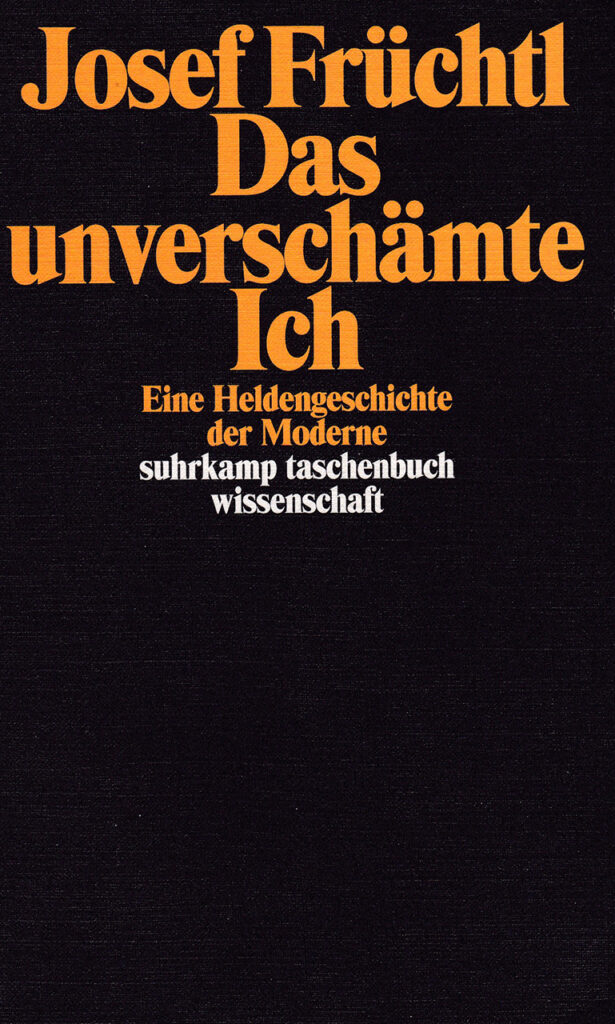
Über die Moderne nachdenken heißt über das Ich nachdenken. Über das Ich nachdenken heißt, seine Geschichte zu rekonstruieren. Sie verläuft, so die Generalthese des Buches, auf drei sich überlagernden Ebenen und macht das Ich zum hoch ambivalenten, männlich geprägten Helden der Moderne. Dies nahzuweisen, ist allerdings nicht nur ein philosophisches, sondern auch ein kulturhistorisches Unternehmen. Für letzteres bietet sich der Bereich des Films an. Der Bogen der Betrachtung zieht sich dementsprechend philosophisch zunächst von Hegel über Lukács und Horkheimer/Adorno zu Habermas – die klassische, sich selbst begründende Moderne; von der Romantik zu Ch. Taylor und Rorty – die agonale Moderne in ihren zwei Varianten, der tragischen und der ironischen; schließlich von Nietzsche zu Foucault und Deleuze/Guattari – die hybride Moderne. Kulturell am signifikantesten gespiegelt finden sich diese drei Traditionsstränge in den Filmgenres des Western, des Verbrecherfilms und des Science fiction-Films. Die Moderne erweist sich, so gesehen, als Kampf des (männlichen) Ich mit und gegen sich selbst, und der Diskurs der Moderne erhält eine essentiell romantische Dimension.
The Impertinent Self.
A Heroic History of Modernity
translated by Sarah L. Kirkby
(Stanford University Press 2009)
The “impertinent self” is one with which we are quite familiar: it is the self of talk shows that air its dirty laundry, the puffed up and shameless braggart of billboards and reality TV. The book takes on this self in order to elaborate a philosophical and cultural theory of modernity as the battle of the ego against itself. Only a return to the Romantic discourse of subjectivity will allow us to address this self, identified here as modernity’s ambivalent (male) hero. Positing that modernity is a stratified phenomenon, this book tells its hero’s tale according to three philosophical layers: the classical (Hegel, Lukács, Horkheimer/Adorno, Habermas), the agonal (Taylor and Rorty), and the hybrid (Nietzsche, Foucault, Deleuze/Guattari). In cultural terms, these layers correspond in turn to the hero of three cinematic genres – the Western, the gangster movie, and the science-fiction film – that provide us with an analysis and critique of both modernity and popular culture as exemplified by the dominant mass medium of the twentieth century.